Skip the Stuff: The US Campaign Changing What Comes With Your Takeaway

You order a meal online. It arrives and you open the bag to find four disposable forks, three sauce packets, a fistful of napkins, and a set of chopsticks. For one person, eating at home, with a drawer of perfectly good cutlery. Nobody asked for any of it. Nobody wanted it. And now it's all heading to the bin.

If you're in the US, this will sound very familiar. In the UK and Australia, automatic throwaway cutlery with every delivery order is less of a norm, but the broader challenge of unnecessary single-use items in food service is something we all recognise. A US campaign called Skip the Stuff is tackling it head-on through policy change in a way that's well worth paying attention to. The results so far are very encouraging.
What is Skip the Stuff?
Skip the Stuff is a policy campaign with a simple idea: food businesses should only provide single-use cutlery, condiments, napkins, and other disposable items when a customer actually asks for them.
Not bundled in automatically. Not stuffed in as a default. Only when needed.
Right now, disposables are handed to customers whether they want them or not. Skip the Stuff flips that so you only get them if you ask. Customers get what they need, businesses save money, and we reduce waste at the source.
The policy applies to takeout and delivery orders, and stronger versions also cover dine-in service, requiring restaurants to provide proper reusable tableware for customers eating on-site rather than handing out disposables by default.
How did Skip the Stuff start?
Skip the Stuff was originally started by Upstream Solutions, a US-based nonprofit focused on ending our throwaway culture through systemic change rather than individual consumer guilt. Their model was built on a simple observation: the problem isn't just that people use disposables. It's that the whole system is set up to push them on customers whether they want them or not.
From there, the campaign has been taken up and built on by a growing coalition of organisations. Beyond Plastics (working to end single-use plastic pollution) joined the national effort and developed a version of the policy that goes further, covering non-plastic alternatives too. Clean Water Action and its ReThink Disposable programme have driven campaigns at local and national level, particularly in New Jersey. Surfrider Foundation chapters across the US have taken it into their coastal communities. Together, they've built a movement that's passing real legislation.
It's worth noting what Skip the Stuff laws actually do, and don't do. They're often described as "bans," but they don't prohibit restaurants from offering disposable cutlery or condiments at all. They simply mean those items won't be handed out by default. Customers can still ask for them. It's a subtle but important distinction, and one that tends to make the policy much easier to pass. California and Washington State led the way with legislation in 2022, followed by Oregon in 2025. New Jersey's law, coming into effect in August 2026, goes furthest, covering both takeout and dine-in service.

Why does it matter?
The numbers are sobering. In the US alone, 561 billion disposable food service items are used every year, generating 4.9 million tons of waste. Americans use more than 36 billion utensils and as many as 142 billion straws annually, the vast majority handed out automatically whether the customer wants them or not.
The environmental case is clear: single-use items used once and thrown away create enormous amounts of waste that ends up in landfill, waterways, and the wider environment. But there's also a compelling economic argument. Most disposable cutlery and condiments are never even used. Restaurants are literally paying to create waste that nobody wants. According to Clean Water Action, this costs US businesses over $200 million every year.
Skip the Stuff focuses on prevention, not cleanup, cutting waste before it becomes litter or landfill. That framing matters. It's not about shaming people for forgetting their reusables or asking individuals to carry the weight of a systemic problem. It's about changing the default.
How New Jersey is Skipping the Stuff
If you want to see what's possible when communities organise around this issue, look at New Jersey.
It started at the grassroots level. Clean Water Action NJ, Beyond Plastics New Jersey, and other local organisations, environmental bodies, community green groups, students and other volunteers partnered to pass 63 local Skip the Stuff laws and 21 formal statements of support across towns and municipalities throughout the state. Town by town, community by community, volunteers made the case to local leaders, and it worked.
That local momentum built into something much bigger. A statewide law was signed on 20 January 2026 and comes into effect on 1 August 2026, described as the strongest Skip the Stuff law in the country.
What makes New Jersey's law particularly significant is its scope. It covers both takeout orders and dine-in service, meaning no single-use disposable cutlery or condiments can be handed out unless a customer asks for them. It's the first state law in the US to go that far.
What New Jersey shows us:
Start local - You don't need national change to start. Every law passed at town level builds the evidence and political will for something bigger. Over 60 New Jersey communities proved the policy works before the whole state got on board.
It takes many hands - This wasn't won by one organisation. It took environmental groups, community volunteers, students, and local green teams all pushing in the same direction.
Businesses can get behind it too - When businesses realise they're paying for waste their customers don't even want, the conversation changes. Skip the Stuff isn't anti-business; it's pro-common-sense.
Delivery apps matter as much as restaurants - A strong Skip the Stuff policy also requires meal delivery apps to let customers choose what extras they want rather than including everything automatically. That's where a huge proportion of throwaway waste ends up.
Why is this a US campaign?
Many countries have moved straight to banning single-use plastic tableware altogether. France led the way in 2020 as the first country to ban single-use plastic plates, cups and utensils, with the rest of the EU following suit. All four nations of the UK now have bans in place. Australia has taken a similar approach, with state-by-state bans rolling out since 2021. In each case, these governments chose outright prohibition rather than the opt-in model that Skip the Stuff advocates for.
The US context is different. With no national legislation in place and significant variation between states, the approach of making disposables available only on request has become a practical and achievable route to change, building momentum town by town and state by state.
If you want to understand more about what the English ban covers and what it means in practice, we wrote about it here: The new ban on single-use plastic tableware in England explained
What Skip the Stuff shows us, wherever we are, is that changing the default is possible, and that community organising can drive real policy change. That's an inspiring model regardless of which country you're in.
Get involved
Visit Upstream Solutions, the home of the campaign, with sample policies, local action plans, and a full suite of campaign assets: https://upstreamsolutions.org/skipthestufftoolkit
The Beyond Plastics toolkit has model bills and a social media toolkit: https://www.beyondplastics.org/campaign-toolkits/skip-the-stuff)
Clean Water Action's toolkit includes talking points and outreach materials: https://cleanwater.org/skip-stuff-toolkit
Use #SkipTheStuff and #ReThinkDisposable to add your voice online
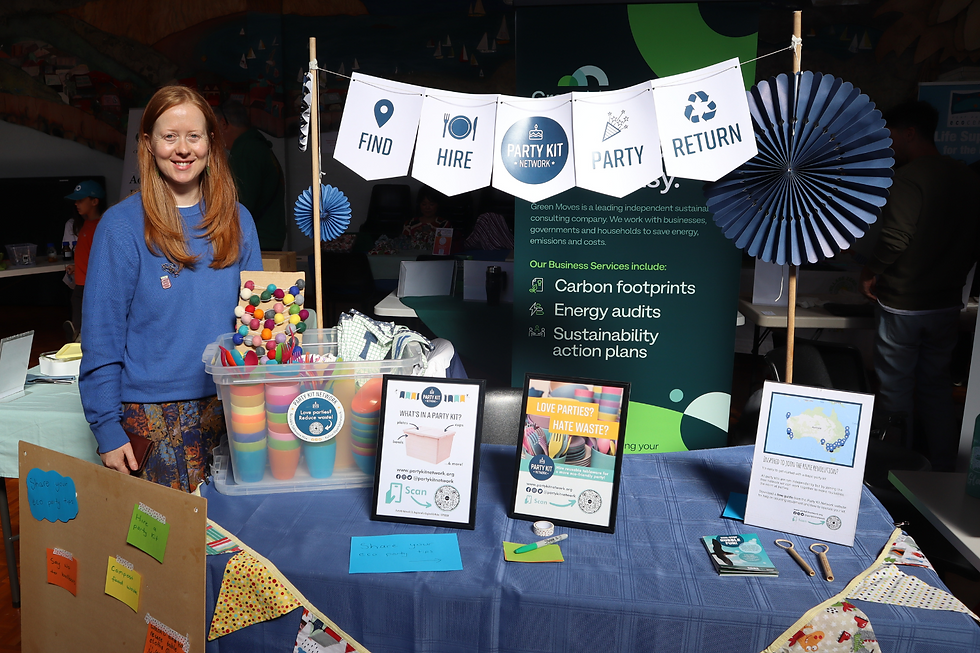
And if you're not yet part of Party Kit Network, join us! Making reusable tableware easy and accessible for celebrations is our small piece of the same puzzle. Find a party kit near you | Start your own party kit
Sources:
Upstream Solutions Skip the Stuff Toolkit | Beyond Plastics Skip the Stuff Campaign Toolkit | Clean Water Action Skip the Stuff New Jersey | Clean Water Action Skip the Stuff Toolkit | New Jersey Plastics Policies - Local and Statewide